- Wed, March 16, 2022

Loading
Loading
1. DC vs CSK IPL 2026 Match 48 Begins with High Expectations
The 48th match of the Indian Premier League 2026 brought together Delhi Capitals and Chennai Super Kings at the Arun Jaitley Stadium, Delhi on May 5. The fixture arrived at an important stage of the season with both teams looking for momentum in the race toward the playoffs. Delhi came into the game hoping home conditions would help them produce a strong all-round display. Chennai, meanwhile, entered with confidence and a clearer tactical structure. The crowd expected a competitive contest because both sides featured experienced international players and impactful domestic talent. The surface initially looked balanced, offering some grip for bowlers while still rewarding proper strokeplay. Conditions under lights promised a better batting experience in the second innings. From the opening over itself, it was clear that execution in the middle overs would decide the outcome. The contest eventually unfolded exactly that way. Chennai’s smarter decision-making across both innings proved decisive and gave them a valuable away win in the DC vs CSK IPL 2026 clash.
2. Toss Report and Match Strategy from Both Captains
Delhi Capitals won the toss and chose to bat first. Captain Axar Patel backed the idea of putting runs on the board and using scoreboard pressure later in the evening. On paper, the decision made tactical sense because Delhi had bowlers who could defend totals under pressure. Chennai Super Kings therefore started with the ball, asking their bowling unit to exploit the early grip available on the surface. From the opening spell, CSK bowlers attacked disciplined lines and kept the field compact. The plan was simple—prevent boundaries, force risks and create pressure through dot balls. Delhi’s top order attempted to settle first before accelerating later. That approach, however, allowed Chennai to control the tempo of the innings. As the game progressed, the pitch became slightly easier for batting. This later proved important because Chennai’s chase benefited from improved stroke-making conditions. Even though Delhi made the first tactical call at the toss, Chennai executed their match plan more effectively.
3. Delhi Capitals First Innings: 155 for 7 in 20 Overs
Delhi Capitals finished with 155 for 7 in 20 overs, a total that looked competitive but slightly short of ideal at the Arun Jaitley Stadium. Pathum Nissanka began with positive intent and struck 19 from 15 balls, including three boundaries and one six. KL Rahul managed 12 off 13 but could not convert his start. Nitish Rana scored 15 while Karun Nair added 13, yet neither batter managed to build a substantial partnership. Delhi kept losing wickets at intervals, which prevented rhythm from developing. Axar Patel fell cheaply for 2 and that further increased the pressure. During the middle overs, Tristan Stubbs tried to stabilize the innings with 38 from 31 deliveries. At the death, Sameer Rizvi produced the most valuable innings with an unbeaten 40 from 24 balls. Ashutosh Sharma’s late 14 off 5 gave useful finishing momentum, but Delhi still ended below the total they would have preferred.
4. How Chennai Super Kings Controlled Delhi Through Bowling Discipline
Chennai’s bowling effort formed the foundation of the victory. Akeal Hosein delivered one of the most controlled spells of the match, returning 1 for 19 in 4 overs and maintaining excellent economy. His control in length prevented Delhi from attacking freely in the powerplay. Mukesh Choudhary removed Pathum Nissanka and kept useful pressure with figures of 1 for 31. Noor Ahmad changed the rhythm of the innings by dismissing both Nitish Rana and Karun Nair. His 2 for 22 in 3 overs became a key middle-overs contribution. Gurjapneet Singh also provided a breakthrough by dismissing Axar Patel. Jamie Overton, despite bowling only one over, picked up the important wicket of Tristan Stubbs. Even though Anshul Kamboj was expensive, the overall bowling unit worked with discipline. Chennai never allowed Delhi to dominate any phase of the innings. That collective pressure restricted the home side to a chaseable target.
5. Important Partnerships That Shaped Delhi’s Innings
A closer look at the partnerships explains why Delhi could not reach 170. The opening stand between Pathum Nissanka and KL Rahul produced 29 runs, but it lacked sustained momentum. After that, short partnerships followed without one major stand that could anchor the innings. The innings changed when Tristan Stubbs and Sameer Rizvi added 65 runs together. That was Delhi’s most productive partnership and it briefly revived hopes of a stronger total. Stubbs played the stabilizer while Rizvi accelerated smartly. However, the partnership arrived slightly later than Delhi would have liked. By the time the attack came, Chennai had already controlled the scoring rate through the middle overs. Ashutosh Sharma’s late cameo added urgency, but it came too close to the finish. In T20 cricket, timing of acceleration matters as much as raw runs. Delhi had contributions, but not the ideal structure required for a match-defining innings.
6. Chennai Super Kings Begin the Chase with Calmness and Clarity
Chasing 156, Chennai Super Kings approached the target with maturity. The required rate never became threatening because their batters focused first on stability and then on controlled acceleration. Ruturaj Gaikwad fell for 6 when Lungi Ngidi provided Delhi an early breakthrough. Soon after, Urvil Patel added quick runs with 17 from 9 balls before being stumped off Axar Patel. At 45 for 2, Delhi sensed an opportunity to return strongly. However, Chennai remained composed and refused to panic. The middle overs became the turning phase of the chase. Strike rotation improved, gaps were found regularly and loose deliveries were punished. Instead of chasing boundaries every over, Chennai built pressure through consistency. The batting group understood the dimensions and pace of the surface perfectly. That calm approach made the target look smaller with every passing over.
7. Sanju Samson’s Unbeaten 87 Becomes the Defining Performance
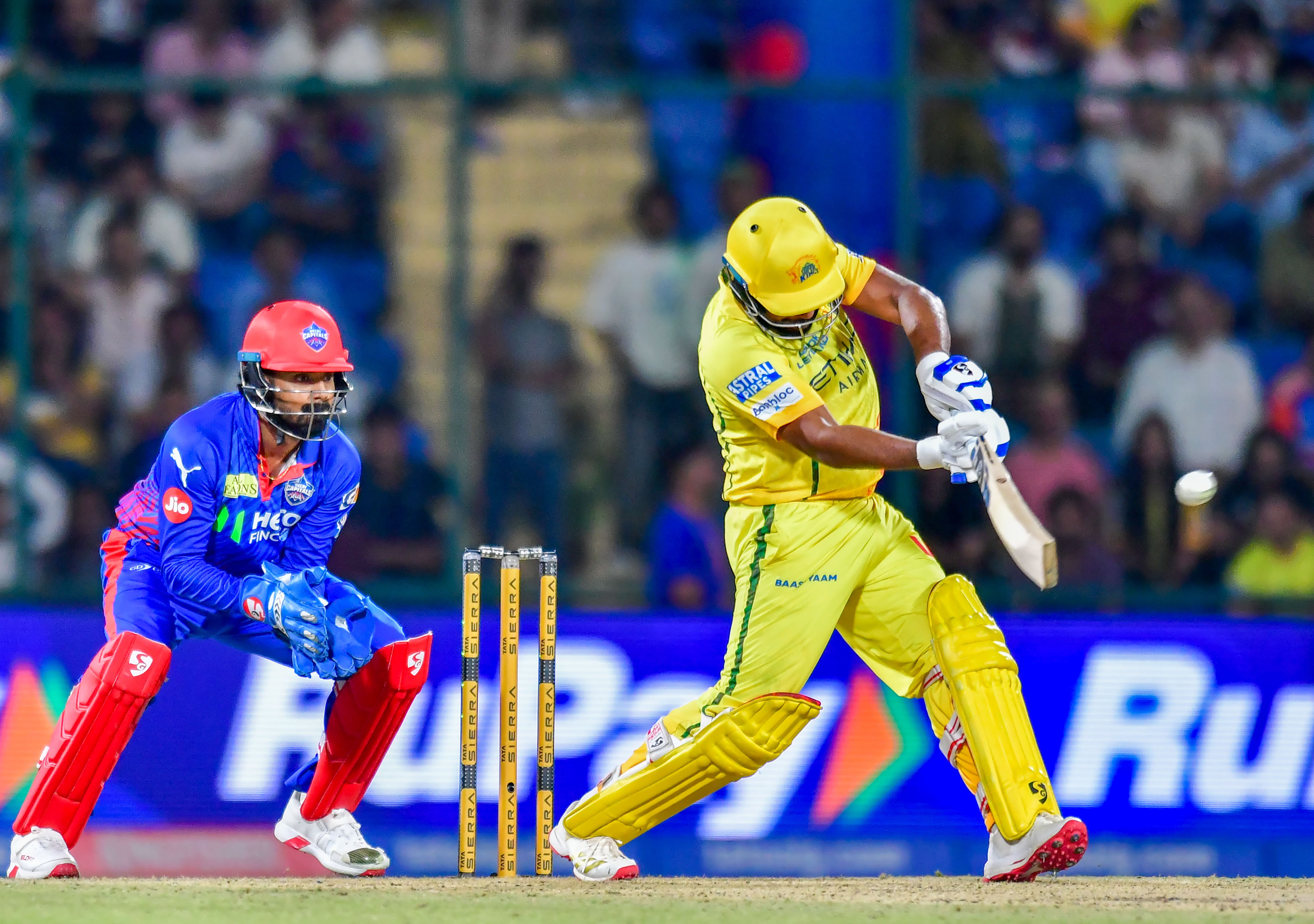
Sanju Samson produced the innings that defined the DC vs CSK IPL 2026 result. He remained not out on 87 from 52 balls, striking 7 fours and 6 sixes at a strike rate above 167. His innings was a lesson in pacing a chase. Early in the innings, he assessed the surface and absorbed the pressure created by the fall of two wickets. Once settled, he shifted gears with remarkable control. He attacked both pace and spin without taking unnecessary risks. His boundary options were calculated, and his strike rotation kept the scoreboard moving even when boundaries were not available. Delhi’s bowlers kept searching for a breakthrough but Samson never lost composure. His shot selection under pressure showed leadership and maturity. More importantly, he ensured Chennai remained in control from the middle overs until the winning moment. It was unquestionably the standout batting effort of the match.
8. Kartik Sharma’s Supportive Knock Completes the Job
While Sanju Samson rightly took the spotlight, Kartik Sharma played the perfect supporting role. He remained not out on 41 from 31 balls, hitting four boundaries and two sixes. His innings was built on awareness of match situation rather than flashy strokeplay. He rotated strike effectively and ensured Delhi could not build pressure through dot balls. Together, Sanju Samson and Kartik Sharma added an unbeaten 114-run partnership for the third wicket. That stand completely changed the direction of the contest. At 45 for 2, Delhi had a realistic chance, but the partnership gradually closed every opening. Sharma attacked the right bowlers at the right time and never allowed the required rate to climb. His contribution also allowed Samson to bat with freedom. In successful T20 chases, partnerships define outcomes, and this one became the decisive batting phase of the evening.
9. Delhi Capitals Bowling Analysis and Why the Defense Failed
Delhi’s bowling started reasonably but lost control after the early breakthroughs. Lungi Ngidi dismissed Ruturaj Gaikwad and finished with 1 for 30 in 4 overs. Axar Patel also made an impact with the wicket of Urvil Patel while conceding only 25 runs in 4 overs. For a brief period, Delhi looked competitive. The problem emerged in the middle overs where Chennai’s batters found rhythm and rotated strike too easily. Kuldeep Yadav went for 34 in 3 overs without a wicket, which reduced Delhi’s ability to control the middle phase. T Natarajan had the toughest outing, conceding 39 runs in 2.3 overs. Once Sanju Samson settled, Delhi lacked wicket-taking pressure. Another costly factor was the seven wides, which gave Chennai extra scoring opportunities. Their bowling was not poor overall, but they failed to create sustained pressure when the match demanded it most.
10. Turning Point That Shifted the Match Toward Chennai
The match turned in two connected phases. The first came during Delhi’s innings when Chennai restricted them from pushing beyond 160 despite having wickets in hand. The middle overs bowled by Akeal Hosein and Noor Ahmad slowed scoring momentum significantly. That left Delhi slightly below par. The second and decisive turning point came after Chennai lost two early wickets. At that moment, Delhi had a window to attack aggressively. Instead, the partnership between Sanju Samson and Kartik Sharma shut that door completely. Their unbeaten 114-run stand drained pressure from the chase and steadily shifted control toward Chennai. Once the partnership crossed fifty, Delhi’s energy in the field visibly dipped. Momentum in T20 often swings quickly, and here it swung firmly toward Chennai during that middle phase of the second innings.
11. Last Season Compared to This Season: What Has Changed
One of the notable aspects of IPL 2026 has been Chennai’s improved balance compared to last season. Previously, they occasionally depended too heavily on isolated individual performances. This season, their structure looks more stable. Their bowling plans are clearer, especially through the middle overs. Batters also appear more composed during chases. Delhi Capitals, on the other hand, continue to show quality but have struggled at times to convert starts into complete match-winning performances. In this match, that difference became visible. Delhi had useful contributions but lacked one dominant phase. Chennai produced impact in both innings—control with the ball and composure with the bat. That is often the mark of teams that sustain long tournament campaigns. If this pattern continues, Chennai could become increasingly dangerous as the league stage progresses.
12. Final Result and Match Summary
At the end of the DC vs CSK IPL 2026 Match 48, Delhi Capitals scored 155 for 7 in 20 overs while Chennai Super Kings chased 159 for 2 in 17.3 overs. Chennai Super Kings won by 8 wickets with 15 balls remaining. Sanju Samson’s unbeaten 87 was the headline performance, while Kartik Sharma’s 41 not out provided the ideal finishing support. For Delhi, Sameer Rizvi’s 40 not out and Tristan Stubbs’ 38 were notable contributions. With the ball, Noor Ahmad and Akeal Hosein shaped the first innings through control and timely breakthroughs. The match ultimately reflected Chennai’s stronger tactical execution. They read conditions better, handled pressure more calmly and capitalized on key moments. In a crucial stage of the tournament, it became an important and convincing win for the visitors.
13. Powerplay Analysis: Early Momentum and Tactical Intent
Delhi Capitals powerplay-la 37 runs mattum eduthanga. Chennai bowlers line and length-ah tight-a maintain pannadhunaala boundary scoring limited-a irundhuchu. Pathum Nissanka positive start kuduthaalum CSK early control-a establish panniduchu. Powerplay mudinja apram Delhi innings-ku strong launch kidaikkala. Chennai chase-la 44 runs in powerplay vandhadhu. Adhu scoreboard pressure-a immediate-ah reduce panniduchu. Ruturaj wicket vizhundhalum Chennai batting calm-a irundhadhu. Powerplay difference dhaan rendu innings-oda early momentum-ai define pannadhu. DC cautious start eduthadhu, CSK measured but effective start eduthadhu. Adhu dhaan later chase-ku base-a amaindhadhu.
14. Fall of Wickets and Match Pressure Moments
Delhi innings-la wickets regular intervals-la vizhundhadhu. 29/1, 36/2, 52/3, 61/4, 69/5 nu scoreboard pressure continuous-a build aayiduchu. Oru settled batter long innings build panna mudiyala. Middle overs-la wicket fall pattern run rate-ai slow panniduchu. Chennai chase-la 24/1 and 45/2 nu rendu quick wickets vandhadhu. Andha stage-la Delhi comeback chance irundhadhu. Aana Sanju Samson and Kartik Sharma partnership pressure-a absorb panniduchu. Athukku apram wicket opportunity romba kammi aayiduchu. Fall of wickets dhaan innings momentum-ai direct-a affect pannadhu.
15. Best Batting Performance of the Match
Indha DC vs CSK IPL 2026 match-la batting performance pathi pesina Sanju Samson clear standout. 87 not out off 52 balls innings match context-la romba valuable. Early pressure irundha situation-la crease-la settle aagi, innings-a control pannaar. Boundary timing, strike rotation, field placement reading ellam mature-a irundhadhu. Death overs varaikkum wicket kudukkama chase-a carry pannaar. Kartik Sharma 41 not out strong support kuduthaar. Delhi side-la Sameer Rizvi 40 not out and Tristan Stubbs 38 useful contributions. Aana match-defining impact Sanju innings dhaan.
16. Best Bowling Performance of the Match
Bowling perspective-la Akeal Hosein and Noor Ahmad Chennai-ku major impact create pannanga. Akeal 4 overs 19 runs 1 wicket kuduthu powerplay-la run flow-a control pannaar. Noor Ahmad 3 overs 22 runs 2 wickets eduthu middle overs momentum-a shift pannaar. Karun Nair and Nitish Rana wickets strategic-a vandhadhu. Mukesh Choudhary and Gurjapneet Singh supporting breakthroughs kuduthanga. Delhi bowling-la Axar Patel 1 for 25 decent spell bowl pannaar. Lungi Ngidi early wicket eduthaar. Aana sustained middle-over pressure create panna mudiyala. Chennai bowling unit overall-a better execution kaattiduchu.
17. Fielding Impact and Game Awareness
T20 cricket-la fielding impact romba mukkiyam. Chennai fielding indha match-la neat and alert-a irundhadhu. Dewald Brevis catch, Ruturaj Gaikwad direct run-out involvement, boundary saving efforts ellam innings momentum-a slow panniduchu. Delhi innings-la singles convert aaguradhu kashtama irundhadhu. Chennai chase time-la running between wickets clean-a irundhadhu. Strike rotation consistent-a nadandhadhu. Pressure moments-la fielding discipline team confidence-ai improve pannadhu. Small fielding moments dhaan total-a 10–15 runs difference create pannum. Indha match-la adhu clear-a therinjadhu.
18. Captaincy Comparison: Axar Patel vs Ruturaj Gaikwad
Axar Patel toss win panni batting choose pannadhu tactical-a correct decision. Aana innings middle phase-la momentum maintain panna Delhi struggle pannadhu. Bowling changesum middle overs-la Chennai partnership break panna impact kudukkala. Ruturaj Gaikwad captaincy-la bowling rotations smart-a irundhadhu. Right bowler right phase-la use panninaar. Field placementsum pressure build panna helpful-a irundhadhu. Chase time-la batting group panic aagala. Captaincy-la calmness and game reading Chennai pakkam konjam stronger-a therinjadhu.
19. What This Result Means for the IPL 2026 Points Race
Indha Chennai Super Kings 8-wicket win points table perspective-la important result. Away conditions-la dominant victory eduthadhu confidence boost kudukkum. Net run rate-kum positive impact kudukkum. Season crucial stage-la momentum romba mukkiyam. Chennai-ku indha win tactical confidence kudukkum. Delhi Capitals-ku indha defeat middle-order consistency and death-over finishing mela work panna vendiya signal. League stage close aagura nerathula every win playoff race-la direct influence pannum. Adhanala indha result tournament picture-la significance carry pannudhu.
20. Final Takeaway from DC vs CSK IPL 2026 Match 48
Overall-a DC vs CSK IPL 2026 Match 48 Chennai Super Kings oda complete team performance-a reflect pannadhu. Bowling-la control, batting-la composure, partnerships-la maturity, fielding-la awareness ellam serndhu victory vandhadhu. Delhi Capitals individual contributions kuduthaalum complete match dominance create panna mudiyala. 155/7 defend panna enough pressure create panna mudiyala. 159/2 in 17.3 overs nu chase pannadhu Chennai execution quality-a kaattudhu. Sanju Samson’s unbeaten 87 indha match-oda biggest headline. Tournament progress aagum pothu indha victory Chennai-ku important confidence marker-a irukkum.


Comments:
Leave a Reply