- Wed, March 16, 2022

Loading
Loading
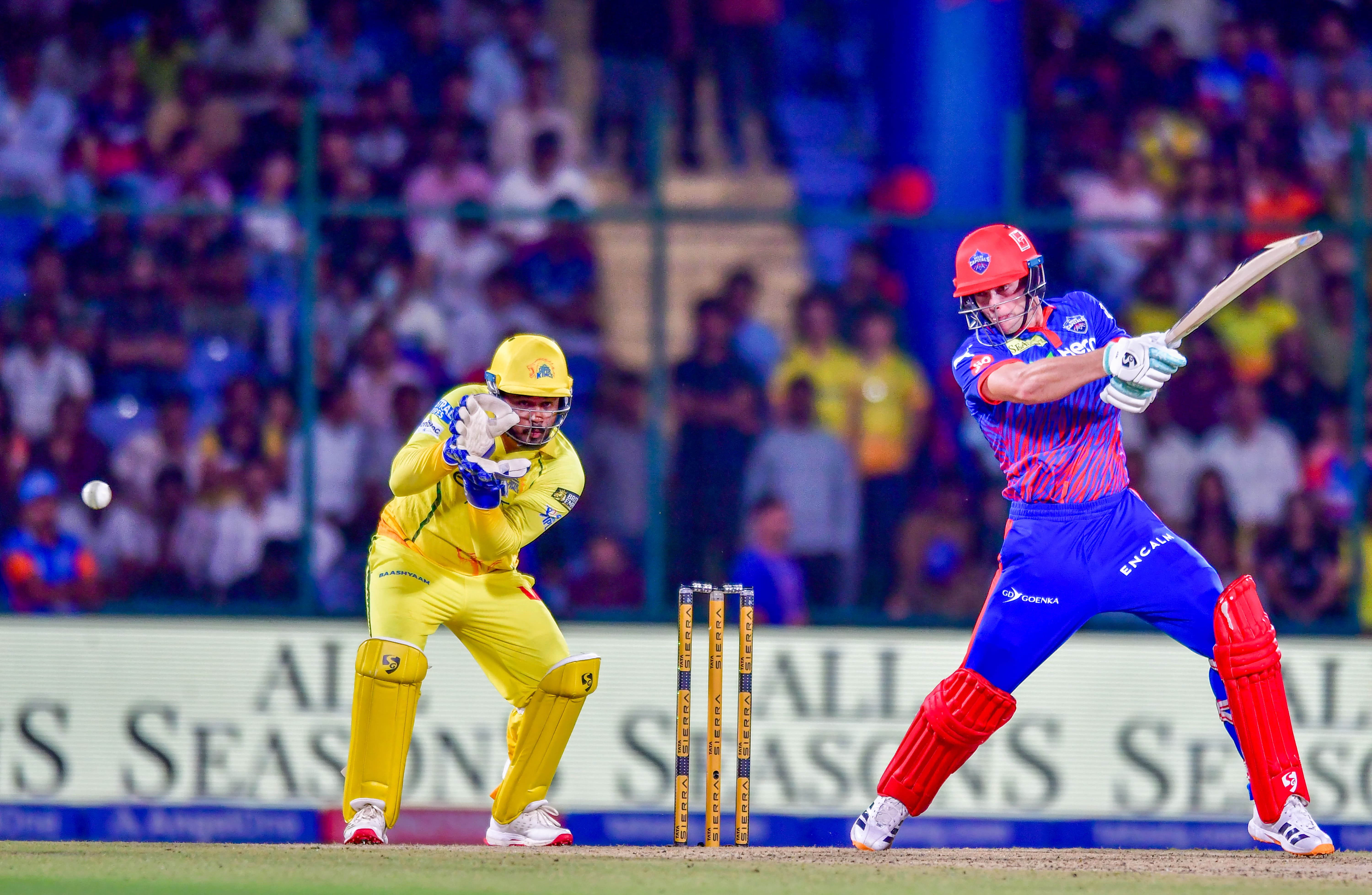
1. DC vs CSK IPL 2026 Match Overview
The 48th match of the Indian Premier League 2026 between Delhi Capitals and Chennai Super Kings was played on May 5 at Arun Jaitley Stadium, Delhi. Both teams entered the contest needing an important win to improve their position in the points table. Delhi Capitals won the toss and chose to bat first. The surface looked slightly slow, but batting conditions improved later in the evening. CSK handled the pressure better across both innings. Delhi posted a competitive but not commanding total. Chennai chased the target with confidence and calmness. Their batting was well structured and disciplined. The victory strengthened CSK’s momentum in the tournament. The match also highlighted smart captaincy and strong game awareness. Chennai eventually completed the chase with 15 balls remaining. It turned out to be one of their most balanced performances of the season.
2. Toss Report and Match Conditions
Delhi Capitals captain Axar Patel won the toss and elected to bat first. The decision was understandable because teams often prefer scoreboard pressure in night matches at Delhi. Early in the innings, the pitch offered grip and slightly slower pace, making stroke-making difficult. CSK’s bowlers quickly understood the conditions and kept tight lines. Their spinners and change-of-pace bowlers prevented Delhi from getting early momentum. During the second innings, batting became easier as the ball came onto the bat better. That made the chase more manageable for Chennai. Dew was not excessive, but the surface definitely became more batting friendly. The toss decision was logical, but Chennai adapted much faster to the changing conditions. That adaptability made the difference in the contest.
3. Delhi Capitals First Innings – 155 for 7 in 20 Overs
Delhi Capitals finished with 155/7 in 20 overs. Their innings never fully gathered momentum because Chennai consistently applied pressure in the middle overs. Delhi lost wickets at important stages and could not build a dominant partnership at the top. The powerplay was cautious rather than aggressive. Once wickets fell, CSK’s bowlers controlled the scoring rate effectively. Delhi tried to recover in the latter half of the innings, but the total still remained slightly below par. The innings had useful contributions, but none that completely changed the pace of the game. CSK’s discipline in bowling lengths and controlling boundaries kept Delhi under pressure. In the final overs, Delhi added valuable runs but could not reach 170-plus, which could have made the chase more challenging. The final score left the game open, but slightly in Chennai’s favour.
4. Best Performers for Delhi Capitals
Delhi Capitals had a few notable contributors despite ending with a modest total. Sameer Rizvi played an important hand and finished as one of the main scorers with 40 runs. Tristan Stubbs also contributed valuable runs during the middle phase. Their partnership briefly helped Delhi regain stability after early setbacks. However, Chennai’s bowling attack never allowed the innings to accelerate fully. In the final overs, Delhi searched for boundaries but could not sustain momentum for long. The batting effort showed fight, but lacked one decisive innings that could have shifted control. On a ground like Delhi, a score above 170 would have created greater pressure. Instead, Chennai remained confident entering the chase. Delhi’s batting therefore felt competitive, but not commanding enough.
5. Chennai Super Kings Bowling Performance
Chennai Super Kings produced an excellent bowling display. They understood the pitch quickly and used the conditions intelligently. Noor Ahmad was one of the standout bowlers, breaking partnerships and slowing down the scoring rate. Akeal Hosein also delivered a very economical spell and controlled the powerplay phase effectively. The bowling unit worked as a group rather than relying on one individual. Their lengths were disciplined and they rarely gave easy boundary balls. In the middle overs, CSK squeezed Delhi and forced them into riskier strokes. That pressure led directly to wickets. Their fielding support also complemented the bowling effort. Restricting Delhi to 155 proved to be the first major turning point of the match.
6. Chennai Super Kings Chase – 159 for 2 in 17.3 Overs
Chennai Super Kings chased down the target with maturity and control, finishing at 159/2 in 17.3 overs. They lost an early wicket, but there was no panic in the batting approach. The chase was built around partnerships and smart shot selection. Rather than forcing big shots, Chennai rotated strike consistently. Once the powerplay ended, they steadily increased scoring tempo. Delhi’s bowlers tried to create pressure, but Chennai’s batters remained composed. The required run rate never became a serious concern. In the final stages, Chennai accelerated confidently and sealed the match with 15 balls to spare. The chase reflected experience, calmness and clarity in planning. It was one of their cleanest run chases of IPL 2026 so far.
7. Sanju Samson’s Match-Winning Knock
The biggest difference-maker of the match was Sanju Samson. He remained unbeaten on 87 runs from 52 balls and played the defining innings of the contest. His knock combined patience, timing and calculated aggression. He started carefully, understood the pace of the wicket, and then accelerated at the right time. Once settled, he dominated both pace and spin. His boundary options were smart rather than reckless. Samson controlled the chase beautifully and never allowed Delhi to regain control. His presence gave confidence to the rest of the batting order. The innings also showed leadership under pressure. It was clearly the best batting performance of the match and the foundation of CSK’s victory.
8. Kartik Sharma and Supporting Contributions
While Sanju Samson led the chase, Kartik Sharma played an equally valuable supporting role. He remained unbeaten on 41 from 31 balls. His partnership with Samson stabilized the innings and later pushed Chennai toward the finish line. He rotated strike well and punished loose deliveries. Importantly, he prevented pressure from building at the other end. The unbeaten stand between the two batters effectively ended Delhi’s hopes. Their partnership combined calmness with smart tempo control. In T20 chases, such supporting knocks are often as important as the headline innings. Kartik’s contribution ensured Chennai did not lose momentum during the middle overs. It was a mature and highly useful innings in the context of the match.
9. Turning Point of the Match
The turning point came during the middle overs of Delhi’s innings. At one stage, Delhi looked capable of pushing toward a stronger total. However, Chennai’s bowlers applied pressure through tight overs and timely wickets. That phase slowed the scoring rate significantly. Instead of finishing around 170 or 175, Delhi ended at 155. That difference proved decisive. During the chase, the unbeaten partnership between Sanju Samson and Kartik Sharma completely shifted momentum in Chennai’s favour. Once that stand settled, Delhi struggled to create wicket-taking opportunities. The match then steadily moved away from the home side. Smart bowling followed by calm batting defined Chennai’s victory.
10. Last Year vs This Year – Team Evolution
Last season, both teams often relied heavily on individual brilliance. This year, the approach appears more structured. Delhi Capitals have shown flashes of quality but have struggled to convert promising starts into complete performances. Chennai Super Kings, meanwhile, have looked more balanced in recent games. Their bowling plans are clearer and their batting has shown better game awareness. The presence of players like Sanju Samson, Ruturaj Gaikwad, Noor Ahmad and Akeal Hosein has added flexibility. One of the biggest differences this season is Chennai’s ability to control the middle overs. That tactical improvement was visible again in this match. If they continue with this discipline, they can become stronger playoff contenders. The DC vs CSK IPL 2026 result reflected not just one good day, but better overall execution.
Match Result
Delhi Capitals – 155/7 (20 overs)
Chennai Super Kings – 159/2 (17.3 overs)


Comments:
Leave a Reply