- Wed, March 16, 2022

Loading
Loading
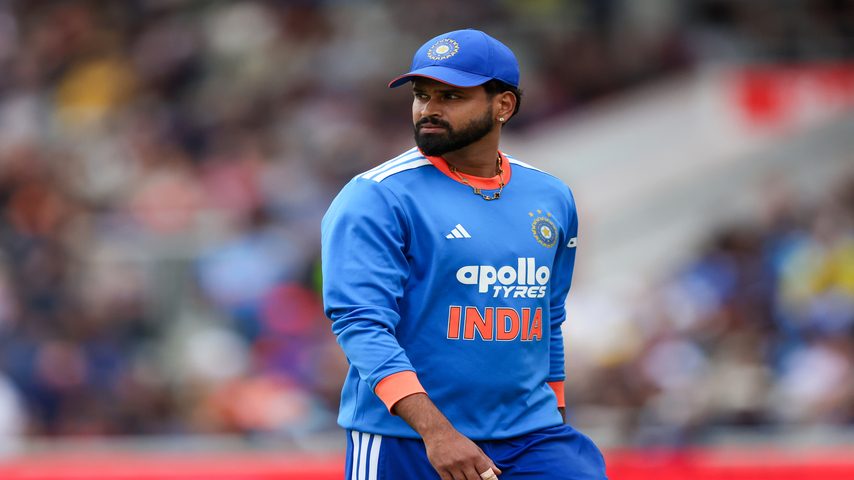
India vs England T20I Shreyas Iyer Admits India Fell Short in Execution
The India vs England T20I series slipped out of India's hands after England produced another commanding performance to register a comprehensive nine-wicket victory in the fourth match at Bristol. Following the defeat, India captain Shreyas Iyer admitted his side failed to execute their plans with both bat and ball, allowing England to clinch the series in convincing fashion.
The India vs England T20I encounter once again exposed India's struggles in adapting to English conditions. Batting first, India posted 158/7 in their allotted 20 overs, a score that never looked enough on a batting-friendly surface.
While wickets continued to tumble at the other end, skipper Shreyas Iyer stood tall with a determined innings of 80 from just 49 deliveries. His knock, featuring four boundaries and five sixes, prevented India from suffering an even bigger collapse and gave the visitors a fighting total.
However, Iyer himself admitted after the match that 158 was below par.
"158 wasn't the perfect total on the board. Eventually, we saw how quickly they chased it down. We fell a bit short in terms of our execution," the India captain said during the post-match presentation.
The India vs England T20I quickly turned into a one-sided contest once England began their chase. Although India managed to dismiss Jos Buttler early, Harry Brook and Phil Salt completely dominated the bowling attack thereafter.
The pair stitched together an unbeaten partnership of 151 runs for the second wicket, guiding England to 159/1 in only 13.5 overs. Their aggressive batting ensured England reached the target with 37 deliveries remaining, highlighting the gulf between the two sides on the day.
Reflecting on India's bowling performance, Iyer explained that the team had identified the correct lengths before taking the field.
According to the skipper, bowling on the top of middle stump and leg stump made scoring difficult, but India's bowlers failed to consistently hit those areas. Instead, variations in pace and loose deliveries allowed England's batters to dominate throughout the innings.
The India vs England T20I series has also marked an important learning phase for India's young squad. Iyer acknowledged that the team is currently undergoing a transition and believes mistakes are inevitable when inexperienced players compete in unfamiliar overseas conditions.
Several young cricketers are playing their first international series in England, and adapting to the bounce, pace and conditions has proven challenging.
Despite the disappointing result, Iyer remained optimistic about the future.
He stressed that every mistake offers an opportunity to improve and expressed confidence that the younger players would quickly learn valuable lessons from the tour.
The defeat also marks a significant milestone for England. It is the first time they have defeated India in a bilateral T20I series consisting of more than two matches. Before this series, India had dominated the rivalry, winning five of the previous six bilateral T20I series between the two nations, while one ended in a draw.
Additionally, India had won 11 of their previous 12 bilateral T20I series before arriving in England, making this defeat even more disappointing for the visitors.
Despite the series loss, Shreyas Iyer's individual form has emerged as one of the positives. His fighting innings under pressure once again demonstrated his ability to anchor the batting lineup when wickets fall around him.
The India vs England T20I series may already be decided, but India still have an opportunity to finish strongly in the remaining match. With valuable experience gained in challenging overseas conditions, the visitors will aim to correct their execution, support their captain's performances with stronger batting displays, and build momentum for future international assignments.
For India, the focus now shifts from disappointment to development, as a young squad looks to transform hard lessons into long-term success.



Comments:
Leave a Reply