- Wed, March 16, 2022

Loading
Loading
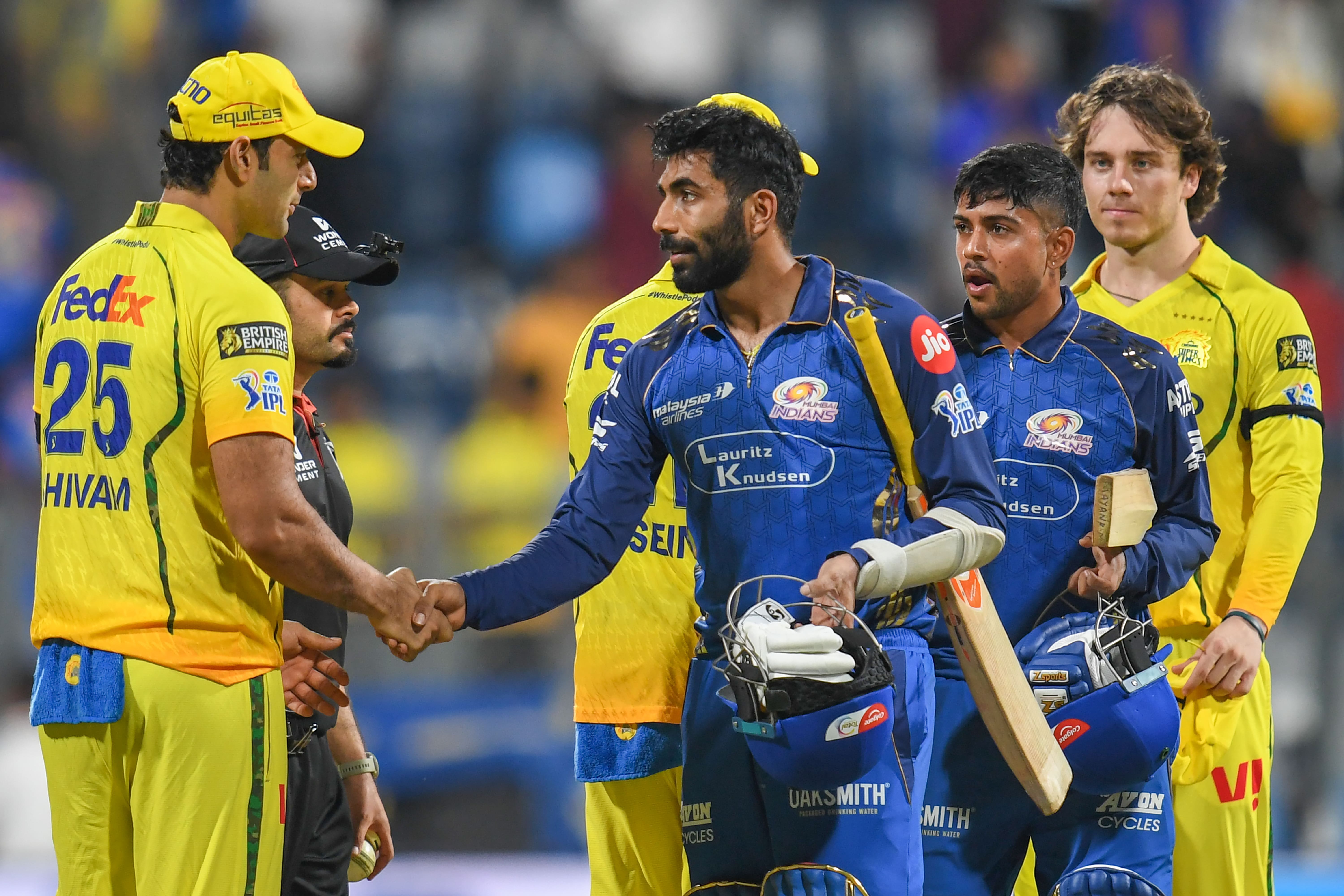
Match Overview: A Rivalry That Promised Fireworks but Turned
One-Sided
Whenever Mumbai Indians face Chennai Super Kings, expectations are always sky-high.
Fans anticipate thrilling moments, last-over finishes, and intense competition between two
of the most successful teams in IPL history. The atmosphere at Wankhede Stadium was
electric, filled with excitement and anticipation for another memorable clash.
However, as the match unfolded, it became clear that this was not going to be a close
contest. Chennai Super Kings approached the game with clarity, discipline, and a well-
defined plan, while Mumbai Indians struggled to keep up with the intensity and execution.
What started as an evenly poised battle slowly transformed into a one-sided domination,
with Chennai taking complete control of the match.
Toss Decision and Early Game Plan
Mumbai Indians won the toss and opted to bowl first, a decision that looked perfectly
reasonable given the chasing advantage at Wankhede. The pitch conditions also supported
stroke play in the second innings, making it a logical choice.
But Chennai Super Kings had a different plan in mind. Instead of focusing on quick runs in
the powerplay, they prioritized stability and wicket preservation. Their approach was
clear—build a solid foundation first and then accelerate at the right time.
This calm and composed start allowed Chennai to avoid early damage and set themselves
up for a strong finish later in the innings.
A Calculated Start That Built the Foundation
Chennai’s batting approach in the initial overs was disciplined and controlled. The batters
focused on rotating the strike, finding gaps, and avoiding risky shots. Even when Mumbai
bowlers tried to apply pressure, Chennai remained patient and stuck to their strategy.
Though Mumbai managed to pick up a couple of early wickets, Chennai did not panic.
Instead, they adjusted their game plan, ensuring that the run rate remained steady without
losing momentum.
This phase might not have looked explosive, but it was crucial in setting up the innings. It
provided Chennai with the stability needed to launch a strong attack in the later stages.
Middle Overs: The Silent Game-Changer
The middle overs often decide the direction of a T20 match, and in this game, it was the
phase where Chennai Super Kings truly took control.
Instead of slowing down, Chennai maintained a consistent scoring rate. The batters played
smart cricket, focusing on placement rather than power. Singles and doubles kept the
scoreboard moving, while occasional boundaries ensured that there were no quiet overs.
Mumbai’s bowlers struggled to break partnerships during this phase. Their inability to
create pressure allowed Chennai to build momentum steadily. By the end of the middle
overs, Chennai had positioned themselves perfectly for a big finish.
This phase quietly shifted the match in Chennai’s favor without creating much noise, but its
impact was massive.
Death Overs Domination: The Decisive Blow
If the middle overs tilted the game, the death overs completely sealed it for Chennai Super
Kings.
The batters switched gears effortlessly, turning controlled aggression into full domination.
Boundaries started flowing regularly, and Mumbai bowlers found it difficult to execute their
plans.
Every mistake from Mumbai was punished. Loose deliveries were sent to the boundary, and
fielding errors only added to Chennai’s advantage. The lack of yorkers and variation in
bowling made it easier for Chennai to score freely.
Crossing the 200-run mark was not just about runs—it was about creating scoreboard
pressure that Mumbai would carry into their chase. At this point, Chennai had not just built
a total, but also taken a psychological lead in the match.
Mumbai Indians’ Chase Begins with Immediate Pressure
Chasing a target above 200 is always challenging, and Mumbai Indians needed a strong start
to stay in the contest. However, things did not go according to plan.
The pressure of the scoreboard was evident from the beginning. Chennai bowlers
maintained tight lines and did not allow easy scoring opportunities. This forced Mumbai
batters to take risks earlier than expected.
The early wickets proved to be a massive setback. Losing key players in the powerplay
meant that Mumbai could never settle into the chase. Instead of building momentum, they
were constantly trying to recover from setbacks.
Lack of Partnerships: The Biggest Weakness
One of the most critical reasons for Mumbai’s failure in this match was the lack of solid
partnerships.
In T20 cricket, especially while chasing big totals, partnerships are essential to maintain
momentum and reduce pressure. However, Mumbai failed to build any significant stands.
Every time a batter looked comfortable, Chennai managed to break the partnership. This
continuous disruption prevented Mumbai from gaining any control over the game.
Even the middle-order resistance was short-lived, as Chennai kept striking at regular
intervals. Without partnerships, the chase slowly slipped out of Mumbai’s hands.
Chennai’s Bowling: Discipline Over Brilliance
Chennai Super Kings did not rely on extraordinary bowling performances but focused on
disciplined execution.
Their bowlers maintained consistent line and length, avoided unnecessary variations, and
forced Mumbai batters to take risks. This approach worked perfectly, as the pressure kept
building with every over.
Instead of chasing wickets aggressively, Chennai allowed the situation to create
opportunities. And when those opportunities came, they capitalized on them efficiently.
This level of discipline made Chennai’s bowling look effortless yet highly effective.
Pressure Builds Into a Complete Collapse
As the required run rate kept increasing, Mumbai Indians found themselves under immense
pressure. The need to score quickly led to risky shots, which resulted in wickets.
The chase slowly turned into a collapse, with wickets falling at regular intervals. Chennai
maintained their composure, sticking to their plans without giving Mumbai any chance to
recover.
What started as a challenging chase ended as a one-sided defeat, highlighting the gap in
execution between the two teams.
Game Awareness: The Real Difference
The biggest difference between Chennai Super Kings and Mumbai Indians in this match was
their understanding of the game situation.
Chennai played according to the situation at every stage. They knew when to defend, when
to attack, and how to control the flow of the match.
Mumbai, on the other hand, struggled to adapt. Their decisions under pressure did not
match the intensity of the situation, which ultimately cost them the match.
Conclusion: A Tactical Masterclass by Chennai
In the end, this match was not just about runs or wickets—it was about strategy, execution,
and composure.
Chennai Super Kings delivered a complete performance, dominating Mumbai Indians in
every aspect of the game. From building a strong total to executing a disciplined bowling
strategy, they controlled the match from start to finish.
Mumbai Indians, meanwhile, will need to regroup, analyze their mistakes, and come back
stronger in the upcoming matches.
This match will be remembered as a tactical masterclass by Chennai Super Kings—a perfect
example of how smart cricket can completely dominate a contest.





Comments:
Leave a Reply