- Wed, March 16, 2022

Loading
Loading
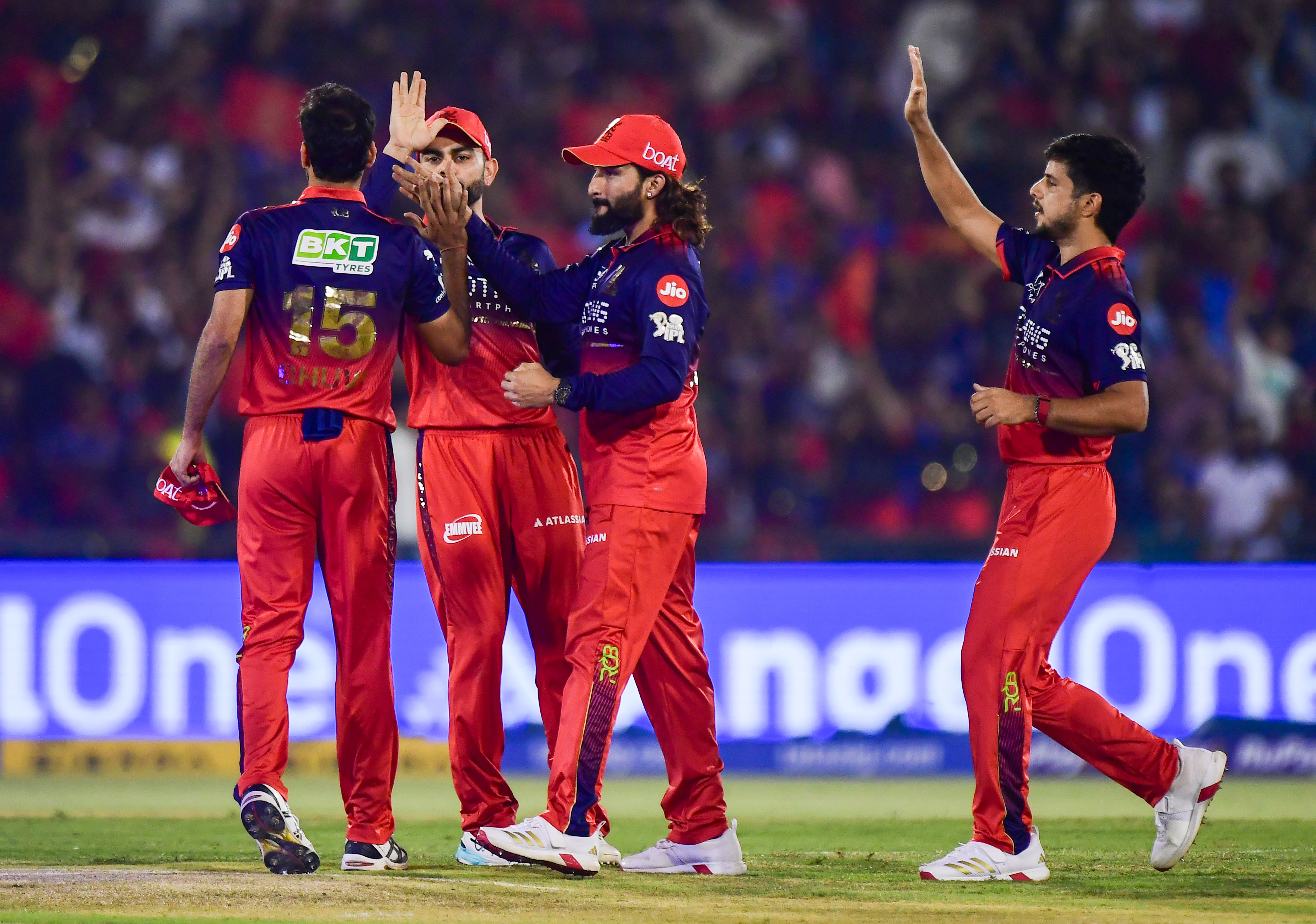
Royal Challengers Bengaluru Beat Mumbai Indians by Two Wickets
Royal Challengers Bengaluru defeated Mumbai Indians by two wickets in Match 54 of the Indian Premier League 2026 at Shaheed Veer Narayan Singh International Stadium in Raipur. The contest developed into a tight and tactical battle where momentum shifted repeatedly across both innings. Mumbai Indians posted 166 for 7 in their 20 overs after useful contributions from Naman Dhir and Tilak Varma. In response, Royal Challengers Bengaluru chased the target with pressure building deep into the final over and eventually finished on 167 for 8. The result was important because it highlighted composure under pressure and the value of lower-order finishing in close T20 contests. For long periods, the match remained balanced with both sides producing important moments. Royal Challengers Bengaluru ultimately managed the decisive phases slightly better. That proved enough to secure a dramatic win. This Royal Challengers Bengaluru vs Mumbai Indians clash delivered one of the more tense finishes of IPL 2026.
Match Details, Toss and Venue Information
The Royal Challengers Bengaluru vs Mumbai Indians fixture was played on Sunday, May 10, as the fifty-fourth match of IPL 2026. The game began at 7:30 PM local time at Shaheed Veer Narayan Singh International Stadium in Raipur. Royal Challengers Bengaluru won the toss and elected to bowl first, a decision shaped by chasing conditions and confidence in their bowling plans. The Raipur venue, with a capacity of around 65,000, created a strong evening atmosphere and added pressure to every phase of the contest. Rohan Pandit and Tanmay Srivastava served as the on-field umpires. Nitin Menon was the third umpire while Amit Sharma took match referee duties. The surface offered enough pace for stroke play but also rewarded bowlers who used variations intelligently. That balance created a match where both batting control and bowling discipline mattered. Conditions therefore played an important tactical role throughout the game.
Bhuvneshwar Kumar Gave RCB the Perfect Start
Royal Challengers Bengaluru made an excellent start with the ball and immediately disrupted Mumbai Indians in the powerplay. Bhuvneshwar Kumar produced the most influential spell of the first innings and finished with outstanding figures of 4 for 23. He removed Ryan Rickelton in the opening over and then quickly dismissed Rohit Sharma and Suryakumar Yadav. Those early breakthroughs created immediate scoreboard pressure and prevented Mumbai from building complete control in the opening phase. His lengths were disciplined, and he forced batters into risky decisions rather than allowing free scoring. Early wickets also gave RCB tactical flexibility in field placements and bowling changes. In T20 cricket, early breakthroughs often shape the entire innings. Bhuvneshwar’s spell did exactly that. It became one of the defining reasons Mumbai could not fully capitalize despite useful middle-order partnerships.
Naman Dhir and Tilak Varma Rebuilt Mumbai’s Innings
After losing three wickets early, Mumbai Indians recovered through a valuable partnership between Naman Dhir and Tilak Varma. Naman played with positive intent and scored 47 from 32 deliveries, striking five fours and two sixes. He absorbed early pressure and gradually rebuilt momentum through smart boundary placement and strike rotation. Tilak Varma provided the stabilizing role while also keeping the scoring rate healthy. The pair added 82 runs and brought structure back to the innings after the early collapse. Their partnership was important because it shifted the match back toward balance. Rather than retreating into a defensive approach, both batters maintained enough intent to keep the scoreboard moving. This middle-over recovery ensured Mumbai remained competitive. It became the platform from which the later phase of the innings developed.
Tilak Varma Anchored Mumbai to a Competitive Total
Tilak Varma played the most complete innings for Mumbai Indians and finished with 57 from 42 deliveries. His knock included three fours and two sixes and combined patience with timely acceleration. He judged the match situation well after the early wickets and gave Mumbai much-needed control through the middle overs. Tilak’s ability to rotate strike prevented RCB from building sustained dot-ball pressure. Once set, he targeted scoring opportunities at key moments and helped Mumbai move toward a defendable total. Raj Bawa also added a useful 16 from 14 balls, while Corbin Bosch remained unbeaten at the end. Mumbai eventually finished on 166 for 7 from 20 overs. Although the total was competitive, it perhaps felt slightly below what seemed possible after the middle-over recovery. That left the contest finely balanced at the innings break.
Early Wickets Put RCB Under Immediate Pressure
Royal Challengers Bengaluru did not begin the chase smoothly. Virat Kohli was dismissed for a duck in the opening over, and Devdutt Padikkal also departed early. Deepak Chahar provided Mumbai with a strong new-ball spell and created early pressure through disciplined lines. Rajat Patidar’s dismissal inside the powerplay added further pressure and forced RCB into a rebuilding phase. At 39 for 3, the chase had shifted clearly in Mumbai’s favour. The powerplay produced only 47 runs, which meant the required rate remained under control but the batting side had little room for another collapse. Early wickets changed the tactical shape of the chase. RCB now needed both stability and controlled acceleration. That situation created the platform for Krunal Pandya’s match-defining contribution.
Krunal Pandya Produced the Defining Innings of the Match
Krunal Pandya delivered the innings that shaped the final result. He scored 73 from 46 balls, hitting four boundaries and five sixes at a strike rate of 158.70. His innings balanced composure with aggression and arrived at exactly the right stage of the chase. Krunal first rebuilt the innings after early wickets and then gradually increased scoring tempo through the middle overs. He targeted matchups intelligently and prevented the required rate from climbing too sharply. His 55-run stand with Jacob Bethell gave RCB crucial stability, while later contributions with Jitesh Sharma helped move the chase closer. The innings was particularly valuable because it came under pressure and against a bowling attack that was regularly taking wickets. Krunal’s batting combined game awareness, patience and controlled acceleration. It was the central batting performance of the Royal Challengers Bengaluru vs Mumbai Indians contest.
Corbin Bosch Kept Mumbai in the Game
Corbin Bosch delivered one of Mumbai Indians’ most influential all-round performances. After contributing with the bat late in the first innings, he became the key wicket-taking bowler during the chase. Bosch finished with 4 for 26 and repeatedly brought Mumbai back into the contest. He dismissed Jacob Bethell, Rajat Patidar, Jitesh Sharma and Tim David at important moments. His ability to break partnerships prevented Royal Challengers Bengaluru from fully settling. Each wicket changed the rhythm of the chase and added pressure to the required equation. Mumbai’s fielding intensity also supported his spell and kept the contest alive deep into the final overs. Bosch’s spell was a major reason the game stayed competitive until the very end. Without that pressure, RCB might have closed the chase earlier.
Late Nerves Created a Dramatic Final Over Finish
The chase remained tense even after Krunal Pandya’s major contribution. When Krunal fell in the eighteenth over, the match again opened up. Romario Shepherd and Rasikh Salam Dar faced immediate pressure as Mumbai looked for a final opening. The dismissal of Romario Shepherd at 157 for 8 increased the tension further. At that stage, the game could still move in either direction. Lower-order finishing therefore became crucial. RCB needed calm decision-making, smart running and clarity under pressure. The closing moments reflected how quickly momentum can shift in T20 cricket. Small decisions, not only big shots, became important in the final phase. That tension turned the chase into one of the most dramatic finishes of the round.
Bhuvneshwar Kumar Finished the Chase Under Pressure
Bhuvneshwar Kumar, who had earlier shaped the match with the ball, also contributed decisively at the end of the chase. He remained unbeaten on 7 from just 2 deliveries and helped Royal Challengers Bengaluru cross the target. His late boundary under pressure carried significant importance because it removed the chance of a final collapse. Rasikh Salam Dar also stayed calm and supported the finish. The unbeaten stand at the end may have been short, but it carried match-winning value. Finishing close games often depends on clarity rather than reputation. Bhuvneshwar’s composure in the final moments completed an excellent all-round contribution. It also highlighted the value of lower-order confidence in close IPL contests.
Extras and Discipline Quietly Influenced the Result
One of the quieter but important factors in Royal Challengers Bengaluru vs Mumbai Indians was the contribution of extras. RCB received 15 extras during the chase, including 11 wides. In a match decided by two wickets and completed on the final ball, those additional runs carried clear tactical significance. Every extra reduces scoreboard pressure and changes batting choices during key overs. Mumbai’s bowling unit produced strong wicket-taking spells, but occasional loss of control allowed RCB to keep the chase alive. Discipline in pressure situations often becomes decisive in T20 cricket. Even a few extra deliveries can change momentum and field placements. In such a tight contest, those small margins mattered.
Royal Challengers Bengaluru Hold Their Nerve in a High Pressure Contest
The two-wicket victory over Mumbai Indians gives Royal Challengers Bengaluru an important result at a demanding stage of IPL 2026. The match showed the value of balanced contributions rather than dependence on a single phase of dominance. Bhuvneshwar Kumar shaped the first innings, Krunal Pandya controlled the chase and lower-order composure finished the job. Mumbai Indians also produced several strong performances, particularly through Tilak Varma and Corbin Bosch, but fell just short in the final moments. The contest carried tactical depth, changing momentum and sustained pressure until the last ball. Royal Challengers Bengaluru ultimately managed critical moments slightly better. That proved to be the difference in a closely fought and memorable IPL encounter.






Comments:
Leave a Reply