- Wed, March 16, 2022

Loading
Loading
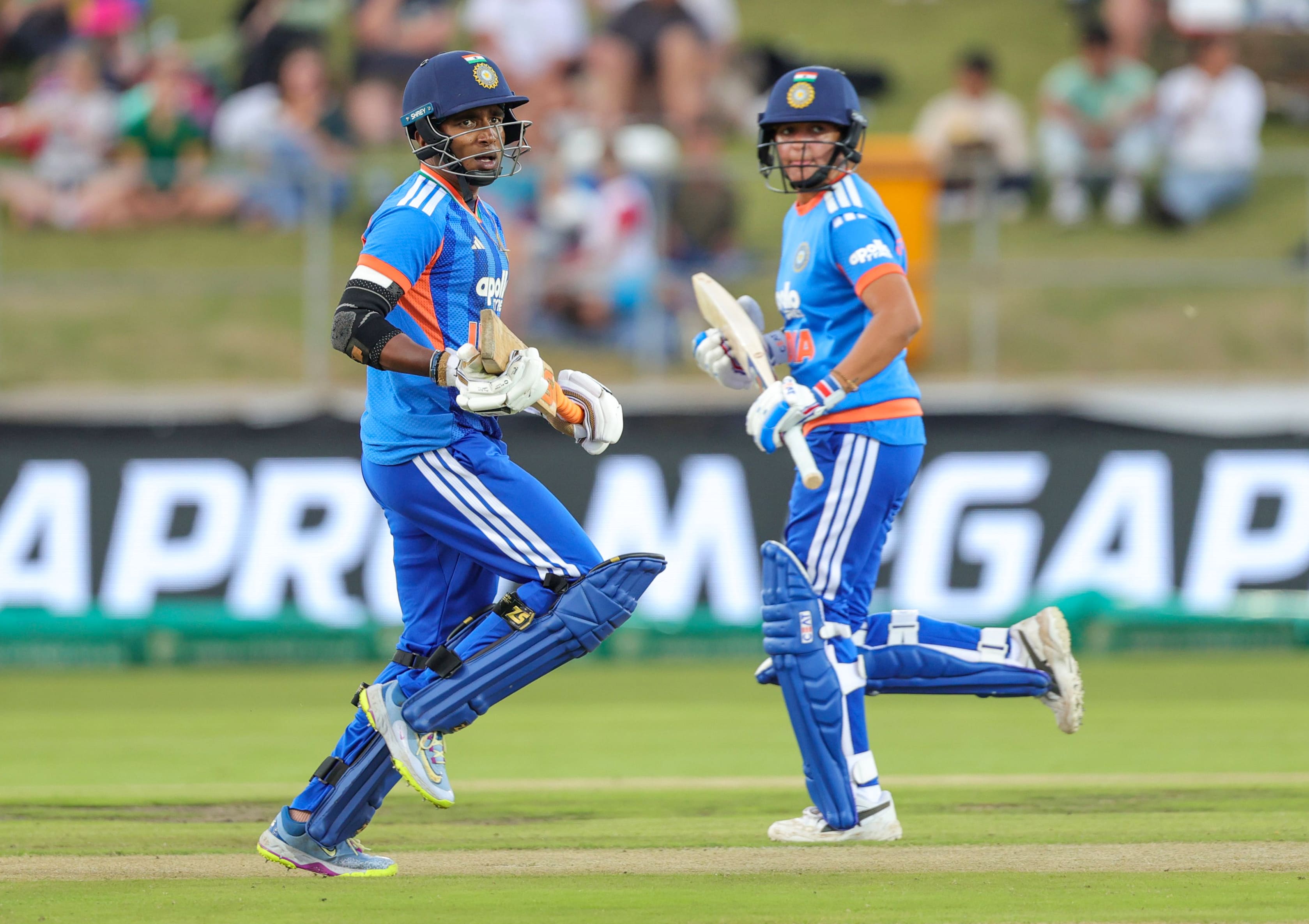
Match Overview – A Captain’s Knock That Defined the Game
The 5th T20I between South Africa Women and India Women at Willowmoore Park,
Benoni turned out to be a well-controlled victory for the home side. South Africa Women
secured a 23-run win, but the match was largely shaped by one outstanding performance
from captain Laura Wolvaardt. Her unbeaten 92 not only anchored the innings but also
ensured her team posted a strong total. India Women, despite showing moments of
resistance, failed to build momentum during the chase. The match highlighted the
importance of partnerships, composure, and consistency in T20 cricket.
South Africa Women Batting – Wolvaardt’s Brilliance Leads the Way
South Africa Women posted 155/6 in 20 overs, and the innings revolved completely
around Laura Wolvaardt’s exceptional knock. Her 92 off 56 balls* was a perfect mix of
elegance and aggression, as she found boundaries consistently while maintaining control
over the innings. She remained unbeaten till the end, ensuring stability throughout.
Support came from Sune Luus, who scored 23 runs and helped build an important
partnership. Towards the end, Sinalo Jafta added quick runs, pushing the total beyond
150. Although wickets fell at intervals, Wolvaardt’s presence ensured that the innings
never collapsed. The team showed good intent in phases, especially in the powerplay
where they scored 49 runs.
India Women Bowling – Moments of Control but Lack of Finish
India Women bowlers had some good phases, but they failed to fully capitalize on those
moments. Renuka Singh Thakur delivered an impressive spell, picking up 2 wickets
while maintaining a tight economy. Shree Charani and Deepti Sharma also contributed
with two wickets each.
However, the inability to dismiss Wolvaardt proved costly. Despite picking wickets at
regular intervals, India could not break the most important partnership. The death overs
also saw South Africa gaining extra runs, which ultimately made a big difference in the
final total.
India Women Chase – A Struggle for Momentum
Chasing 156, India Women never really found their rhythm and ended at 132/8 in 20
overs. The early dismissal of Shafali Verma set the tone for a difficult chase. Jemimah
Rodrigues also fell cheaply, putting pressure on the middle order.
Captain Harmanpreet Kaur tried to stabilize the innings, but her 22 runs were not enough
to control the chase. The only real fight came from Bharti Fulmali, who scored a quick 40
and kept India in the game for some time. Richa Ghosh remained unbeaten on 25, but the
required run rate kept increasing, making the chase difficult.
South Africa Bowling – Discipline and Control Under Pressure
South Africa’s bowling unit executed their plans effectively, ensuring India never gained
control. Nonkululeko Mlaba was highly effective, picking up 2 crucial wickets while
maintaining excellent control. Nadine de Klerk also contributed with 2 wickets at key
moments.
The bowlers maintained pressure by not allowing easy boundaries and forcing Indian
batters to take risks. Their discipline in the middle overs played a key role in slowing
down the chase and eventually securing the victory.
Key Turning Points – Where the Match Was Won
The match saw several crucial turning points that defined the result. The biggest was
Laura Wolvaardt’s unbeaten innings, which gave South Africa a strong total. India’s
early wickets during the chase added pressure and prevented them from building
partnerships. The middle overs where South Africa bowlers controlled the scoring rate
also shifted the momentum completely. Additionally, the lack of a big partnership from
India meant they were always behind in the chase.
Partnership Analysis – The Real Difference
One of the major differences between the two teams was partnerships. South Africa had a
solid foundation built around Wolvaardt, who anchored multiple stands. Even though
wickets fell, partnerships kept the scoreboard moving.
In contrast, India failed to build long partnerships. Small contributions came from
different players, but no one stayed long enough to take control. This lack of stability
made the chase difficult and eventually led to their defeat.
Overall Match Analysis – Experience vs Execution
This match clearly showed the difference between a team executing its plans perfectly
and a team struggling to maintain consistency. South Africa Women displayed better
game awareness, smart batting strategy, and disciplined bowling. India Women, on the
other hand, showed glimpses of potential but lacked execution in crucial moments.
Final Verdict – A Captain’s Innings That Made the Difference
South Africa Women’s victory was built on a complete team performance, led by an
outstanding innings from Laura Wolvaardt. Her ability to stay till the end and guide the
innings made all the difference. India Women will need to work on building partnerships
and handling pressure situations better.
This match stands as a perfect example of how one brilliant performance, combined with
disciplined teamwork, can define the outcome of a T20 game.
Why India Women Lost – A Complete Breakdown
India Women’s defeat in this match was not due to a single mistake, but a combination of
multiple small failures across all phases of the game. The biggest issue was the early
collapse during the chase, which immediately put the team under pressure. Losing key
players like Shafali Verma and Jemimah Rodrigues early meant that the team never had a
strong foundation to build on. In T20 cricket, a stable start is crucial, and India
completely missed that.
Another major factor was the inability to build partnerships. While players like Bharti
Fulmali and Richa Ghosh tried to keep the chase alive, they did not receive enough
support from the other end. The team kept losing wickets at regular intervals, which
increased the required run rate and forced batters into taking unnecessary risks.
From a bowling perspective, India had opportunities to restrict South Africa to a lower
total, but they failed to capitalize on key moments. Despite picking wickets, they could
not dismiss Laura Wolvaardt, who went on to play a match-defining innings. Allowing
one batter to dominate throughout the innings proved to be a costly mistake. Overall,
India lacked execution, composure, and consistency, which ultimately led to their defeat.
Top Performers – Players Who Made the Difference
The match was largely dominated by Laura Wolvaardt, whose unbeaten 92 was the
backbone of South Africa’s innings. Her ability to stay till the end and control the tempo
of the game made a huge impact. She not only scored runs but also ensured that wickets
falling at the other end did not affect the overall momentum of the innings.
In the bowling department, Nonkululeko Mlaba and Nadine de Klerk played crucial roles
by picking up important wickets at the right time. Their disciplined bowling in the middle
overs ensured that India never gained control during the chase.
From India Women, Bharti Fulmali stood out with a fighting 40 runs, showing intent and
aggression when the team was under pressure. Richa Ghosh also contributed with an
unbeaten 25, trying to push the game forward. In bowling, Renuka Singh Thakur
delivered a solid spell, picking up key wickets and maintaining control.
Low Performers – Where the Match Slipped Away
India Women’s top-order failure was one of the biggest reasons for their loss. Players like
Shafali Verma, Jemimah Rodrigues, and Anushka Sharma were unable to make an
impact, which put the middle order under immense pressure. In T20 matches, the top
order is expected to provide a strong start, but in this case, it did the opposite.
Captain Harmanpreet Kaur also could not convert her start into a match-winning innings.
While she tried to stabilize the innings, the lack of acceleration and partnerships around
her made it difficult to chase the target.
On the bowling side, India failed to control the key batter, Laura Wolvaardt. Despite
taking wickets, they could not break her rhythm or force her into making mistakes. This
inability to control the main player of the opposition proved to be a major weakness.
Overall, the lack of impactful performances from key players at crucial moments resulted
in India losing the match.





Comments:
Leave a Reply